
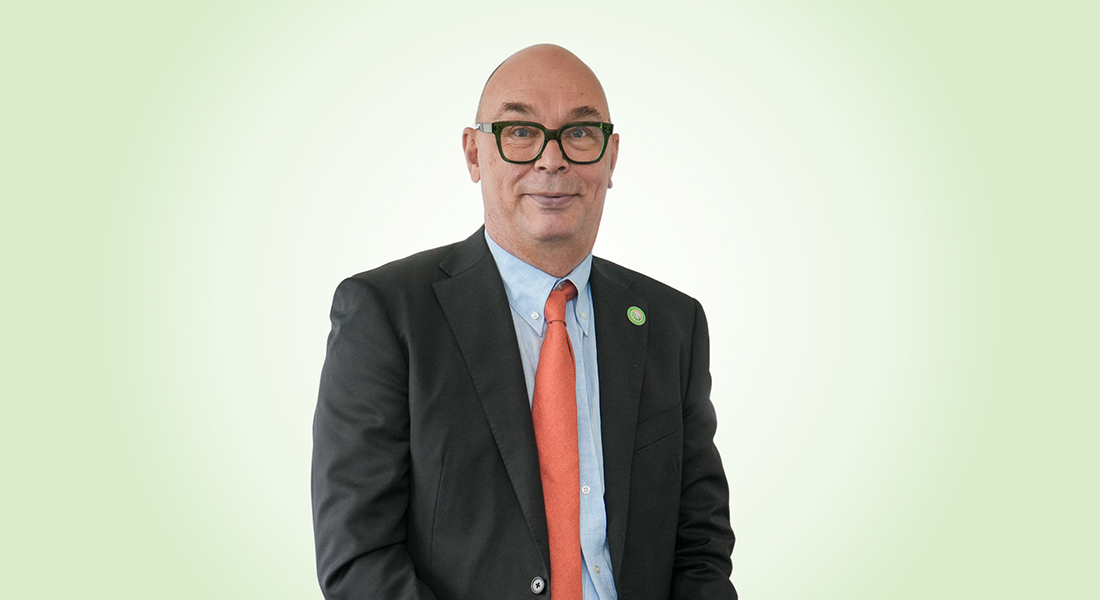
05 Feb Interview with Harri Kiiski, CEO Brunei Fertilizer Industries (BFI)
Brunei has recorded strong progress under its Wawasan 2036 strategy, with the downstream sector contributing 17% of GDP in 2024. What does the downstream sector represent for Brunei under the Brunei Wawasan 2035 strategy and how is BFI helping translate these national ambitions into industrial growth?
The journey began nearly 15 years ago with the establishment of Brunei Methanol Company, as part of Brunei’s effort to diversify beyond oil and gas. With a population of around 460,000 and growing, expanding job opportunities is essential. Oil and gas have underpinned the economy for over a century, but diversification is key for the future.
Brunei Fertilizer Industries (BFI) was founded in 2013. Construction of the fertilizer plant started in 2017 and production was commissioned in 2022. We are now in our third year of operations. As a first-of-its-kind project in Brunei, the company was initially built with strong expatriate support. We developed our systems from the ground up, including quality and operational frameworks, rather than relying on legacy practices. At the same time, we built a Bruneian workforce supported by world-class technology licensors such as Thyssenkrupp and Stamicarbon. We began with about 65% Bruneian employees; today that figure has reached 80%. Women represent 30% of our management team and we have close to a 50/50 gender balance. BFI is a highly diverse organization, with 14 nationalities bringing experience from many different corporate cultures.
In 2023, we introduced our Way of Working (WOW) through an operational excellence program. This unified expertise from different backgrounds into a single BFI operating model, which has proven very successful. In the context of Wawasan Brunei 2035, BFI is one important component. Additional investments are underway, including acetic acid and nitric acid production, refinery expansion projects and several other initiatives currently in the pipeline, many of which are expected to be announced this year.
BFI operates the largest single-train fertilizer plant in Southeast Asia. How would you describe the scale and strategic importance of BFI’s operations, and what have been the key drivers behind the company’s recent growth?
In 2023, we produced just over 900,000 tons of urea. In 2024, production reached 1 million tons, and last year we closed at 1.1 million tons, steadily progressing toward our nameplate capacity of 1.365 million tons. BFI is strategically located on Borneo, with two days’ sailing to the Philippines, five days to Thailand, 15 days to Oceania — including Australia and New Zealand — and about 30 days to the US West Coast.
Logistics are a key advantage: shorter distances mean faster delivery and lower CO₂ emissions. We also offer flexible shipping options, ranging from 20-ton containers to 5,000-ton regional vessels and up to 30,000-ton bulk carriers. This flexibility is especially valuable in a volatile fertilizer market, helping customers manage supply and pricing risk. Logistics are also critical from a biosecurity perspective, particularly for Australia, given our proximity to the Wallace Line. We operate a direct system from production to Muara Port, with vessel loading rates of up to 25,000 tons per day, allowing even large vessels to be loaded in nearly a single day—weather permitting.
BFI is actively reducing its environmental footprint through solar energy adoption and more efficient transport logistics. In what ways does BFI stand out as a regional leader in lowering carbon emissions – both in its operation and through its products?
Globally, the push toward decarbonization and green production has slowed somewhat in recent years, largely due to geopolitical and political uncertainty. Many business leaders are struggling to identify the right timing for major green investments when policy directions can change quickly. At BFI, we are preparing by ensuring that feasibility studies are ready, so we can move quickly once the economics make sense. Carbon capture and storage is one example. The region has potential, given decades of oil and gas activity in Brunei, Malaysia and Indonesia, but the economics are not there yet.
The same applies to green energy. Borneo has significant hydropower capacity, particularly in Sarawak, but Brunei currently lacks the transmission link to our plant. With 80% of the country covered by rainforest, large-scale solar is limited and solar alone cannot support 24/7 operations without hydropower as a complement. While the investment timeline remains uncertain, we are focusing on practical sustainability measures today. One example is producing urea with inhibitors that reduce ammonia losses in agriculture. In rice cultivation, up to 25–50% of urea is typically lost; inhibitors can reduce those losses by 30–40%. This is where we can make a real, cost-effective impact right now.
What progress has BFI made in adopting advanced digital technologies, and how does the facility distinguish itself regionally as a heavy user of next-generation tools?
Digitalization at BFI is still in its early stages. We are progressing together with Thyssenkrupp, laying the foundation for the next phase, which is artificial intelligence. We are also participating in an International Fertilizer Association initiative to apply AI to operational safety, a development that will take a few years. One practical example is hot work monitoring. Traditionally, this requires a fire watch to remain on site for hours after work is completed. We have automated this using AI-enabled cameras that provide real-time alerts if a fire risk is detected. This improves safety while reducing the need for manual monitoring. More broadly, digitalization and AI are helping us increase reliability, strengthen process safety and operate the plant closer to its optimal limits, ultimately maximizing output in a safer and more efficient way.
How has BFI’s workforce and safety strategy supported its growth and why has it become a defining advantage for the company in the regional downstream industry?
Safety is our license to operate and always comes first. I’m proud to say we are approaching 1,000 days without a recordable injury, restricted work case, or medical treatment case. We have operated incident-free since August 2023, with over 4.5 million safe working hours, among the best results in the industry. Safety requires daily focus and constant engagement. One example is our safety training center, where operators can safely experience scenarios such as scaffold collapse, confined-space rescue and electrical hazards. We also use this facility to train contractors before they enter the plant.
We recently introduced a Stop Work Card, empowering every employee to intervene if they see unsafe behavior. We even provide pocket mirrors as a reminder that each individual is responsible for their own safety. Safety is a continuous effort. As a new company, we built our safety culture from scratch and it aligns well with Brunei’s strong national safety mindset, even reflected in everyday practices like reverse parking.
The USA is the world’s third-largest fertilizer consumer, accounting for nearly 11% of global use. How has BFI’s relationship with US customers evolved in recent years and how can closer collaboration between the USA, BFI and Brunei deliver mutual benefits?
In 2023, low water levels significantly disrupted Panama Canal operations, at times cutting traffic by more than half. This highlighted our advantage in supplying West Coast Americas directly. We can competitively serve markets such as Chile, Peru, Colombia, Mexico and Canada.
The US West Coast is more challenging for us, as shipments would need to transit the Panama Canal or sail around South America. In practice, North Africa and the Middle East remain the main suppliers to the US market. California is of particular interest, given its strong environmental focus, which aligns well with the specialty products we are developing.
More broadly, the US market remains unpredictable, with rapid changes in tariffs and policy. With a 30-day sailing time, regulatory stability is critical. The US is also well supplied by its domestic fertilizer industry, supported by shale gas and policy incentives such as the Inflation Reduction Act. Greater long-term stability in legislation and trade policy would make the market more attractive for international suppliers.
Since taking the helm of BFI in 2022, you have overseen its rise as one of Brunei’s largest and most respected companies. What leadership priorities guide you today, and how do you see your role in shaping BFI’s long-term contribution to Brunei’s economy?
At that stage, Brunei needed experience and capability building. My approach has always been to act as a coach and mentor, rather than a strict manager, and to transfer knowledge so people can grow within the industry. Fourteen of our team members have completed the Sustainable Fertilizer Academy, building a strong understanding of sustainability and future industry trends.
We are fortunate to have a young, well-educated workforce, supported by Brunei’s 99% literacy rate and international education in countries such as Australia, Malaysia and the UK. As a leader, my role is to help them apply that knowledge effectively. Our operational excellence program provided the platform to engage, execute and deliver and today, we are clearly seeing the results.
What final message would you like to leave with USA Today readers about Brunei’s downstream ambitions and BFI’s role in supplying global markets responsibly and efficiently?
Climate change is real and we see its effects in Brunei, with record rainfall over the past year. Addressing it requires everyone’s contribution and at Brunei Fertilizer Industries we are doing our part where we can make a meaningful and commercially viable impact. Fertilizers remain essential: around 50% of the world’s population is fed thanks to them. In the future, the last drop of oil will be used to power a tractor to feed the world.
Sorry, the comment form is closed at this time.