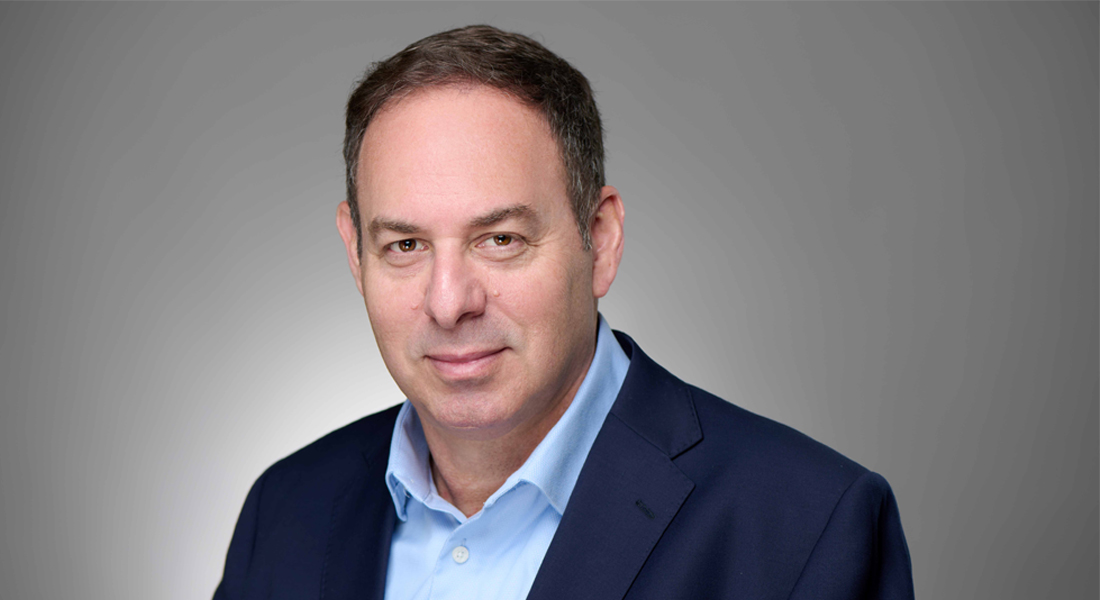
10 Feb Interview with Elad Aharonson, President & CEO, ICL Group
Exceeding $210 billion in global value, the fertilizer industry stands at the heart of food security. Which indicators would you say best reflect the industry’s strong performance and current standing and what is reshaping the industry today?
When I was born in the early 1970s, we were four billion people that lived on Earth at the time. Today we are more than eight billion and pretty soon we’re going to cross 10 billion. The amount of arable land didn’t change much and in many places it actually decreased. So the question is how you feed twice as many people with more or less the same production capacity. When you look at the science and the data, the number one answer is fertilizers. Fertilizers allow us to significantly increase yields and feed a growing population with limited land.
The challenge for the industry is twofold. On one hand, we need to produce more food to ensure food security for a growing population, not only in developed countries but also in developing regions. On the other hand, we must protect the environment for future generations. Specialty fertilizers help address both goals. At ICL, we are shifting from commodity fertilizers toward specialty fertilizers. We invest heavily in R&D and in acquisitions. By 2025 we became the global leader in specialty fertilizers, with more than $2 billion in sales in that segment. We believe this allows us to produce more food in a more sustainable way.
We are moving toward precision agriculture. Specialty fertilizers are tailored to specific crops, soils and climates. If you grow cotton in the Midwest of the United States, you will need a different fertilizer than if you grow citrus in southern Spain. The ingredients can be similar, but the ratios and the application methods are different. With drip irrigation or sprinklers, you can deliver nutrients very precisely. That’s the story of specialty fertilizers — customization that improves efficiency and sustainability.
About two years ago, our revenues from commodity fertilizers and specialty fertilizers became similar. We compete with major global players, but we have become the largest in specialty fertilizers. We operate globally, not only in Israel. We have acquired companies in Brazil and expanded in China and India, as well as in Europe and North America.
ICL has established a strong US presence through advanced production facilities in Fresno, California and Adel, Georgia, supplying high-quality solutions tailored to American growers. How important is the market for you?
The United States and North America are very important markets for us. It’s a large and advanced market that fits sophisticated agricultural solutions. ICL has seven production sites and five R&D sites in the United States across fertilizers and food ingredients. We generate roughly $1 billion in annual sales there. The US is also a leading adopter of new technologies and provides strong competition, which helps us improve. Overall, it’s a very strategic market for our growth.
In fertilizers, Europe is our largest market, followed by Brazil. But for growth in specialty fertilizers, the United States is number one. We have facilities in Fresno, California; Adel, Georgia; and St. Louis, Missouri. We are still a relatively small player in a very large market, which means there is opportunity. We have the technology, the presence, the ambition and strong partnerships with suppliers, retailers and farmers. We plan to continue expanding in general and specifically in the United States.
What are your goals over the next five years?
We see two main growth engines: specialty fertilizers and food ingredients. In the food supply chain, we supply companies like Coca-Cola, PepsiCo and Danone. We believe there is significant room for growth in North America, Europe and Asia. We plan to expand in those regions. An external analysis showed that the calories enabled by our products are equivalent to feeding about 400 million people, roughly 5% of the global population.
Food security is a global challenge. As the population grows and resources remain limited, we need more efficient and technological solutions. That is both a challenge and an opportunity for us. ICL has strong R&D teams in Israel, the United States and Europe. We operate across Europe, North America, South America and Asia. This geographic diversity gives us flexibility and resilience.
How does your global-local approach work?
We are a global company with a local orientation. Most of our business is outside Israel, so to succeed in each market we need local teams and local understanding. Our US business is led by Americans, our China business by Chinese teams and so on. This combination of global reach and local expertise is a major advantage
What is your final message for the readers of USA Today?
Agriculture is essential and making it more advanced and technological is critical. We are committed to supporting US farmers and the broader agricultural sector with advanced solutions that help them remain competitive domestically and internationally.
Sorry, the comment form is closed at this time.